What Is NBI Clearance
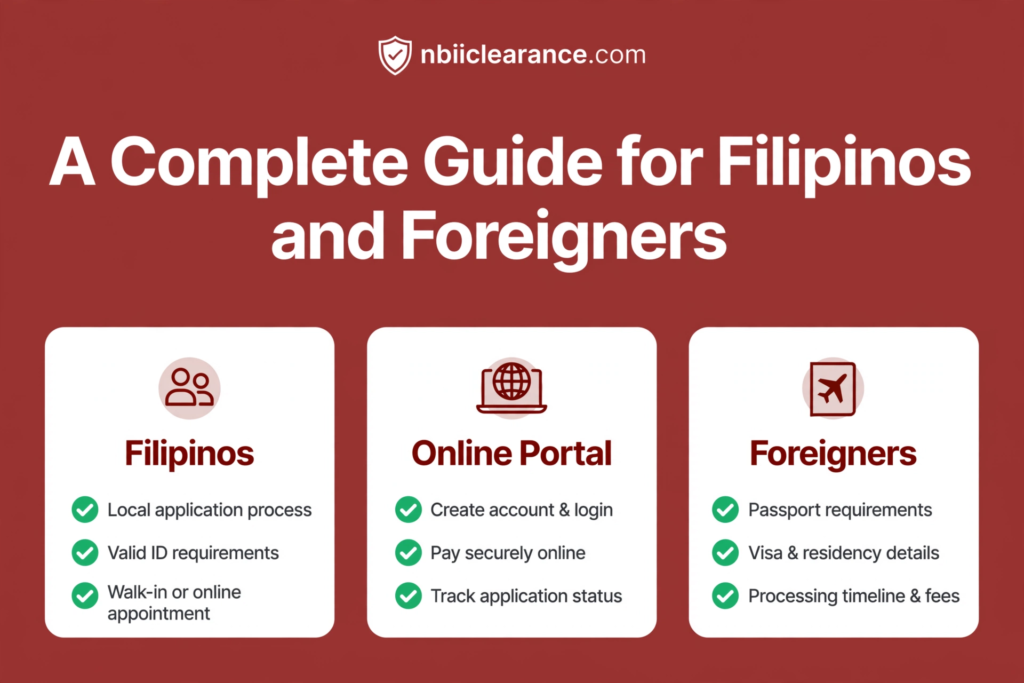
A Complete Guide for Filipinos and Foreigners
If you ever applied for a job in the Philippines tried to get a visa or dealt with almost any kind of official transaction chances are someone has asked you for an “NBI Clearance.” For a lot of first-time applicants the term sounds intimidating — like something out of a crime drama. In reality it is a routine document that millions of Filipinos and foreign residents apply for every single year and once you understand how it works the whole process becomes a lot less mysterious.
This guide walks through everything you need to know: what NBI Clearance actually is who needs one how to get it what it costs how long it lasts, and what to do if something unexpected shows up during your application. Whether you are applying for the first time or you just need a refresher before renewing this should cover it.
For more helpful information, related NBI Clearance guides, and official updates, explore our NBI Clearance and visit the relevant resources for additional details.
The Basic Definition
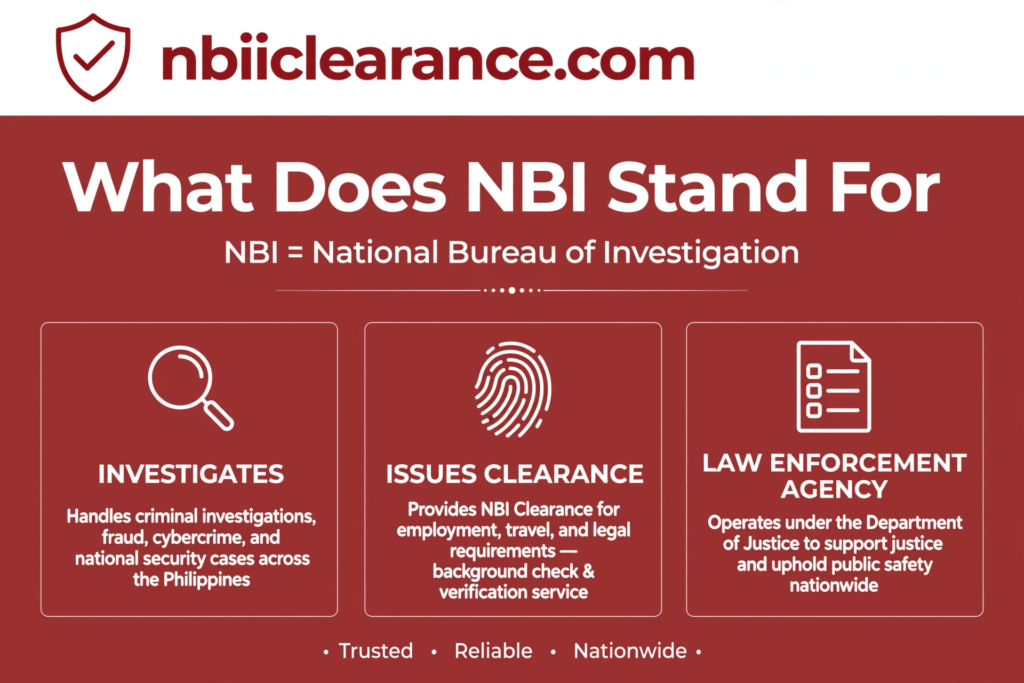
An NBI clearance is an official certificate issued by the National Bureau of Investigation a government agency under the Department of Justice. In simple terms it confirms whether a person has any pending criminal case or negative record on file in the bureaus national database. If nothing turns up the certificate is issued stating exactly that, no derogatory record found.
The physical document is small about the size of a standard ID card. It includes your photo your full legal name your NBI ID number and a QR code that agencies can scan to verify the certificate is genuine rather than forged or altered. Along the bottom it lists a control number and the date it was issued which together determine how long the document stays valid.
People sometimes describe it as a background check and that description is close enough for everyday purposes. It is essentially the governments way of formally stating that as of the date printed on the certificate your name does not appear in connection with any unresolved criminal matter in its records.
Why the Clearance Exists
The Need for a Centralized and Nationwide Background Verification
The clearance exists because employers embassies government offices and other institutions need a reliable centralized way to verify a person’s background. A local police station can only tell you what happened within its own jurisdiction. The NBI on the other hand pulls from a nationwide database which makes its clearance the most comprehensive background check available in the country.
Thats why it has become the default requirement whenever someone needs to prove they have “no criminal record” for official purposes — whether that’s boarding a plane for overseas work applying for a scholarship abroad or simply starting a new job at a local company. For the latest and official information, please visit the official NBI website.
The Basic Definition
An NBI clearance is an official certificate issued by the National Bureau of Investigation a government agency under the Department of Justice. In simple terms it confirms whether a person has any pending criminal case or negative record on file in the bureau national database. If nothing turns up the certificate is issued stating exactly that no derogatory record found.
The physical document is small about the size of a standard ID card. It includes your photo your full legal name your NBI ID number and a QR code that agencies can scan to verify the certificate is genuine rather than forged or altered. Along the bottom it lists a control number and the date it was issued which together determine how long the document stays valid.
People sometimes describe it as a background check and that description is close enough for everyday purposes. It is essentially the government way of formally stating that as of the date printed on the certificate your name does not appear in connection with any unresolved criminal matter in its records.
Thats why it has become the default requirement whenever someone needs to prove they have “no criminal record” for official purposes — whether that’s boarding a plane for overseas work applying for a scholarship abroad or simply starting a new job at a local company.
Who Issues It and Why the NBI Specifically
The National Bureau of Investigation is the Philippines primary law enforcement and forensic investigation agency similar in function to national bureaus in other countries that maintain centralized criminal records. Because the NBI operates at a national level its database pulls from records across the entire country rather than a single city or province.
This is the detail that explains why an NBI clearance carries more weight than some of the alternatives. A local police clearance for comparison is only checked against records within the specific city or municipality where it is issued. If a person has lived worked or had any legal matter in a different area a police clearance limited to their current address would simply not reflect that history. The NBI clearance closes that gap by checking a single centralized system instead.
This is also why most employers foreign embassies licensing boards and government offices specifically request the NBI version rather than a police clearance. When an application only asks for one type of clearance without specifying which it is almost always safe to assume they mean the NBI certificate.
Why the Document Exists in the First Place
At its core an NBI clearance exists to protect the party requesting it whether that is an employer a foreign government or a lending institution by giving them a reliable way to confirm that the person they are dealing with does not have an unresolved criminal record. It is a form of identity and background verification that reduces risk on the receiving end of a transaction.
For the applicant it also serves as a kind of proof of good standing. Having a clean NBI clearance readily available can make certain processes move faster since it removes one of the more time-consuming verification steps that an employer or agency would otherwise need to handle themselves.
Common Situations Where You Will Be Asked for One
A wide range of transactions in the Philippines call for an NBI clearance and understanding the pattern helps explain why it becomes such a routine part of adult life.
Employment is the most common trigger both for local jobs and overseas work since companies want assurance about a candidate background before extending an offer. Visa applications frequently require it as well since many foreign consulates ask for a criminal record check from the applicant home country as part of their standard requirements. Government transactions including certain business permits professional licenses and firearm applications often list it as a supporting document. Some schools particularly for law medical or education programs request it during enrollment or before allowing students into supervised training placements involving vulnerable groups such as children or patients.
Because it touches so many different processes many working adults in the Philippines end up needing a valid NBI clearance on hand at almost any given time rather than applying for one only when a single specific need comes up.
How Long It Stays Valid
An NBI clearance is valid for exactly one year from its date of issuance. Once that year passes the document is no longer accepted for most official purposes even if nothing about the persons record has changed in the meantime. This is simply how the system is designed since a fresh clearance confirms that the record is current as of a recent date rather than relying on information that could be a year or more old.
It is worth knowing that a document does not need to have fully expired before you are allowed to renew it. Many applicants choose to renew a few weeks or even a couple of months ahead of the expiry date particularly when they know a job offer travel booking or contract deadline is approaching. Some employers and embassies specifically prefer a clearance issued fairly recently sometimes within the past three to six months even if the older one is technically still valid on paper.
What the Certificate Actually Checks
The clearance process compares an applicants name and personal details such as birthdate and birthplace against the NBI central criminal record database. If no match comes up the clearance is issued without any complications usually the same day the applicant completes their photo and fingerprint capture.
If a partial match does appear this is commonly referred to as a hit. It does not automatically mean the applicant has a criminal record. Given how many Filipinos share similar or identical names a hit is fairly common and often simply means that someone else in the database has a name close enough to trigger a manual review. NBI staff then cross-check additional details such as full birthdate and middle name to confirm whether the flagged record actually belongs to the applicant or to a different person entirely. This review adds a few extra business days to processing but is a normal part of how the system protects against mistaken identity in either direction.
How the Clearance Is Different From Related Documents
It helps to understand where an NBI clearance fits compared to a few similar-sounding documents people sometimes confuse it with.
A police clearance as mentioned earlier is limited to a specific city or municipality and does not draw from the same national database. A barangay clearance is even more local confirming residency and standing within a specific barangay rather than checking any criminal record at all. A court clearance sometimes requested for very specific legal or immigration purposes confirms whether a person has any pending cases in a particular court which is narrower in scope than a nationwide criminal record check. None of these fully substitute for an NBI clearance in situations where a national-level check is specifically required though some applications may ask for more than one type of document depending on their purpose.
How People Usually Get One
While this article focuses on explaining what the document is rather than walking through the full application steps it helps to know the general shape of the process. Most applicants register for an account through the official NBI Clearance website, fill out their personal information, book an appointment at a branch of their choosing and pay the applicable fee online. On the appointment date staff capture a photo fingerprint and a signature, a step known as biometric verification. If there is no hit against the database the clearance is typically printed and released the same day.
Returning applicants who already have an account and whose personal details have not changed can usually go through a faster renewal process instead of repeating the full registration from the beginning since their biometric data is already on file from a previous application.
How the Background Check Process Actually Works Behind the Scenes
From an applicant point of view the process looks simple: submit your information, get your biometrics taken and wait for a result. Behind that simple front end though a fair amount of matching and verification takes place.
When you submit your name, birthdate and other identifying details the system searches its database for any existing records tied to a similar or identical identity profile. This is not a simple name search the way you might search a spreadsheet. The system weighs multiple fields together including birthdate, birthplace and sometimes physical descriptors to judge how likely it is that a matching record actually belongs to the person applying.
If the weighted match comes back clean meaning nothing in the database lines up closely enough to flag a concern the application proceeds without further review. If something does line up whether it is a shared name with someone who has an actual case on file or a data entry from years ago that was never properly resolved the application gets routed for manual review by NBI personnel rather than being automatically approved or denied. A human being looks at the details side by side and makes the final call on whether the flagged record belongs to the applicant standing in front of them.
This layered approach, part automated matching and part human verification is what allows the NBI to process a large volume of daily applicants while still catching genuine cases that need a closer look.
What Happens If You Use an Expired Clearance
Submitting an expired NBI clearance to an employer embassy or government office generally results in the document being rejected outright since the one-year validity window is treated strictly across nearly all official uses. This is different from some other documents where a recently expired version might still be accepted with an explanation. An expired NBI clearance simply does not meet the requirement regardless of how clean the underlying record still is.
Submitting an expired NBI clearance to an employer embassy or government office generally results in the document being rejected outright since the one-year validity window is treated strictly across nearly all official uses. This is different from some other documents where a recently expired version might still be accepted with an explanation. An expired NBI clearance simply does not meet the requirement regardless of how clean the underlying record still is.
This is part of why timing renewal properly matters so much. An applicant who waits until the exact expiry date to start renewing risks a gap where they have no valid clearance at all if the process or an unexpected hit takes longer than anticipated. Starting the renewal a few weeks or months ahead of the deadline avoids this entirely.
Frequently Asked Questions
Is NBI Clearance the same as a criminal record?
No. It is a certificate confirming whether any criminal record or derogatory record exists in the national database for that name. If nothing is found it simply states “No Record.”
Can I apply for someone elses NBI Clearance?
No. Because the process requires biometric data — fingerprints a photo and a digital signature — the applicant has to appear in person. There is no valid way to apply on someone else is behalf.
What happens if I never claim my clearance after it is approved?
Uncollected clearances are generally only held for a limited period at the branch. If too much time passes you may need to start the process again.
Do minors need an NBI Clearance?
It is uncommon but not impossible — certain situations like international adoption or specific travel requirements may call for a clearance involving a minor usually with a parent or guardian present throughout.
Is an NBI clearance accepted outside the Philippines?
Yes for many purposes. Foreign embassies, consulates and some overseas employers accept it as proof of a clean record from the Philippines since it is the country’s centralized criminal background check.
Final Thoughts
An NBI clearance is at its core a straightforward document with a specific job: confirming whether a person’s name is free of any pending criminal case in the country’s centralized records. What makes it feel more complicated than that is simply how often it comes up in everyday life from job hunting to travel preparation to government paperwork and how strict the system is about keeping personal details consistent across every application.
Understanding what the document actually represents and why it needs to be renewed periodically makes the rest of the process registration appointments, payment and biometrics much easier to approach with confidence rather than confusion.
Information last reviewed August 2026. Requirements and processes may change over time and always confirm current details on the official NBI Clearance website.
Pingback: NBI Online Registration-Appointment 2026-Step-by-Step Guide
Pingback: Valid IDs for NBI Clearance 2026 – Complete Accepted List
Pingback: Complexion in NBI Clearance Form – What to Write & Examples